LinkedIn Scrapers Explained: How They Work, the Risks and Safer Options
A LinkedIn scraper is software that automatically copies data from LinkedIn pages, such as names, job titles, companies, posts or profile URLs, into a spreadsheet or database. Scrapers are popular because building lead lists by hand is slow. They're also one of the most common reasons LinkedIn accounts get restricted, and they raise real legal questions about personal data.
This guide explains the main types of LinkedIn scrapers, what LinkedIn's User Agreement says, what the well-known hiQ v. LinkedIn case did and didn't decide, how GDPR applies, and safer ways to get the same result. It's a practical overview, not legal advice.
How a LinkedIn scraper works
Every LinkedIn scraper does some version of the same thing: load LinkedIn pages, read the content, and save it in a structured format. They differ in where they run and what they collect.
| Type | How it runs | Main risk |
|---|---|---|
| Browser extension | Reads pages in your browser while you're logged in | LinkedIn can detect extensions acting on its pages; account restriction |
| Cloud scraper using your session | Runs on a vendor's servers with your LinkedIn cookie | Restriction; your session is held by a third party |
| Logged-out web scraper | Crawls public profile pages without logging in | Blocking, legal exposure, incomplete data |
| Data provider or "LinkedIn API" vendor | Sells data collected earlier, often from scraping | Stale data; unclear data provenance under GDPR |
Free LinkedIn scraper tools usually fall into the first group, with low daily caps and an upgrade for more volume. A logged-out LinkedIn web scraper keeps your account out of it, but LinkedIn blocks heavy crawling and hides much of a profile from logged-out visitors, so a generic web scraper for LinkedIn tends to return partial data.
What LinkedIn's terms say about scraping
LinkedIn is clear. Section 8.2 of its User Agreement says members must not "develop, support or use software, devices, scripts, robots or any other means or processes (such as crawlers, browser plugins and add-ons or any other technology) to scrape or copy the Services." The same section prohibits bots or unauthorized automated methods that access the Services, add or download contacts or send messages.
LinkedIn's help center adds that members who use such tools "risk having their accounts restricted or shut down", and that prohibited tools may stop working without notice. In practice, scraping is one of the faster routes to a restriction because it loads many pages quickly. See our guide to a LinkedIn account restricted warning.
LinkedIn profile scraper
A LinkedIn profile scraper collects data from individual profiles: name, headline, current role, company, location, experience and sometimes education and skills. Some add email finding by matching name and company domain against other data sources.
Why people use them
To build lead lists with more columns than a search results page shows, or to enrich a CRM.
What to watch
- Visiting hundreds of profiles a day is unusual for a person and easy for LinkedIn to flag.
- Full profile data is personal data. Collecting more fields than you need makes your GDPR position harder, not easier.
- Profiles change. A scraped file starts going stale the day you make it.
LinkedIn post scraper
A LinkedIn post scraper collects the people who reacted to or commented on a post, or the posts themselves. It's popular for prospecting because engagement is a strong signal: someone who comments on a post about cold email deliverability probably cares about it.
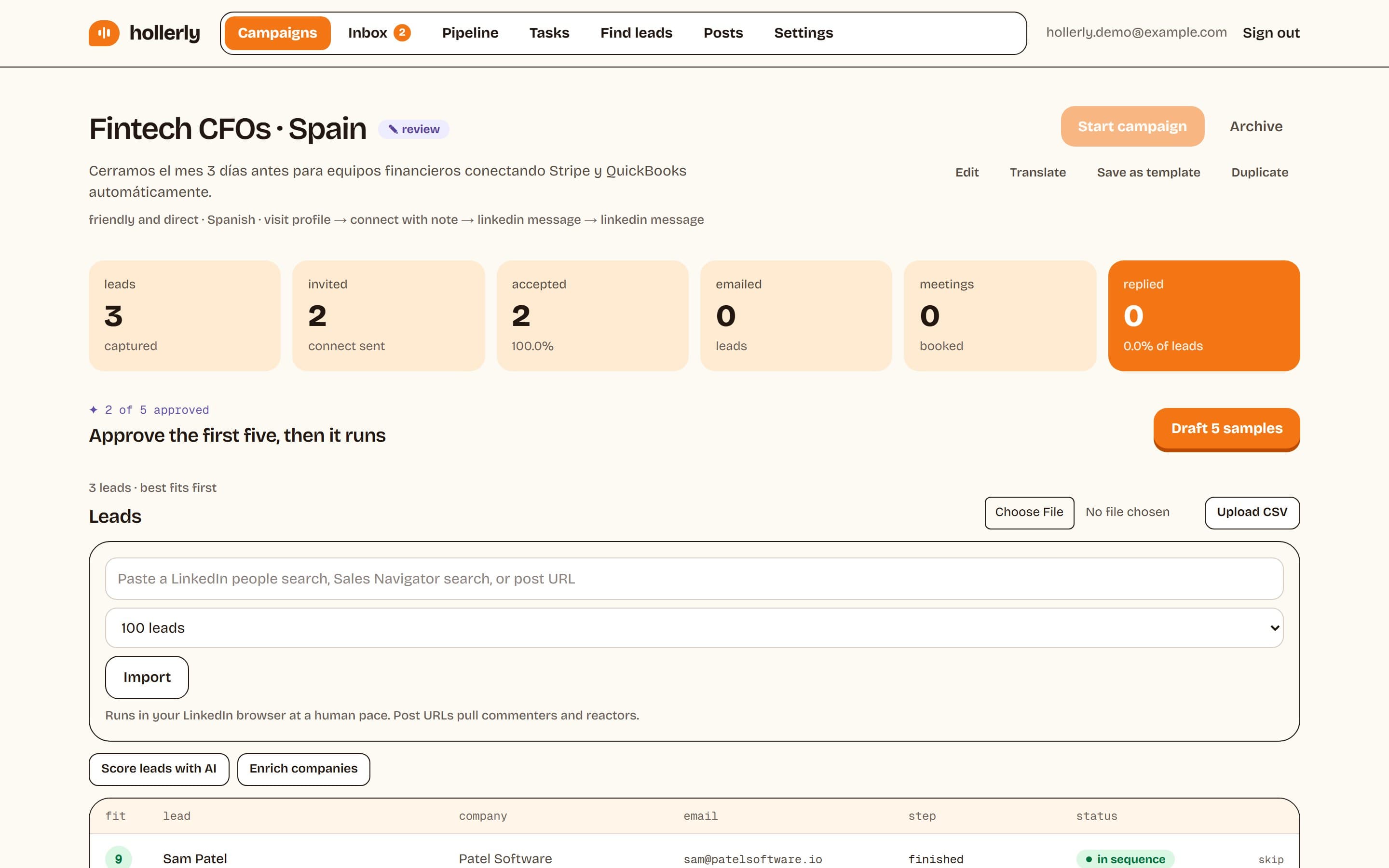
The same intent signal is available without scraping. In Hollerly you paste a post URL into a campaign and it adds the commenters and reactors as leads, working inside your own LinkedIn account at a human pace, within daily limits. More on that below.
LinkedIn scraper API
Searches for a LinkedIn scraper API usually mean one of two things.
LinkedIn's official APIs
LinkedIn offers official APIs through its developer programs, for things like signing in with LinkedIn, sharing posts, marketing and approved partner integrations. Access is permission-based and scoped. They are not a general way to pull other members' profiles for lead lists.
Unofficial "LinkedIn APIs"
Some vendors sell an API that returns LinkedIn profile or company data. Behind it is usually scraping, either live through accounts the vendor runs or from a database collected earlier. Ask where the data comes from, how fresh it is, and what lawful basis the vendor relies on for processing personal data.
Questions to ask any LinkedIn data vendor
- How was this data collected, and when was each record last updated?
- Do you use my LinkedIn account or session, or your own?
- Which lawful basis do you rely on under GDPR, and how do you inform the people in your database?
- How do you handle deletion and objection requests, and do they reach my copy of the data?
- Where is the data stored, and who can access it?
Vague answers to these are a warning sign, both for your LinkedIn account and for your own legal position.
LinkedIn data scraper and the law
A LinkedIn data scraper raises two separate questions: is it allowed by LinkedIn, and is it lawful? The first answer is no, under the User Agreement. The second depends on where you are, what you collect and what you do with it.
hiQ Labs v. LinkedIn, in brief
This is the case most people cite. hiQ scraped public LinkedIn profiles, and LinkedIn tried to stop it. In 2019 the Ninth Circuit Court of Appeals upheld an injunction that let hiQ keep accessing public profiles, reasoning that scraping publicly available data likely wasn't "without authorization" under the US Computer Fraud and Abuse Act. After the Supreme Court's 2021 Van Buren decision, the case was sent back, and in 2022 the Ninth Circuit reached the same view.
That isn't the end of the story. Later in 2022 the district court found hiQ had breached LinkedIn's User Agreement, and the parties settled. So the case is often summarized as "scraping public data is legal", which is too simple. A narrower reading: in the US, scraping public pages may not be a federal computer crime, but it can still breach a site's contract terms, and logged-in scraping is a different situation from logged-out access to public pages.
GDPR and other privacy laws
If you collect data about people in the EU or UK, GDPR applies to you as the controller, whatever tool you use. In general terms that means:
- You need a lawful basis to process the data. For B2B outreach this is often legitimate interests, which requires a balancing test you can document.
- When you get personal data from somewhere other than the person, you generally have to tell them within a reasonable time (often at first contact) where you got it and how to object.
- Collect only what you need, keep it accurate, and delete it when you're done.
- Honor objections and opt-outs straight away, including across campaigns.
Other regions have their own rules, and email outreach has separate rules again. Talk to a lawyer for your specific situation.
LinkedIn company scraper
A LinkedIn company scraper collects company page data: name, industry, size range, headquarters, website, and sometimes employee lists. Company-level data is less sensitive than personal data, but employee lists are personal data again.
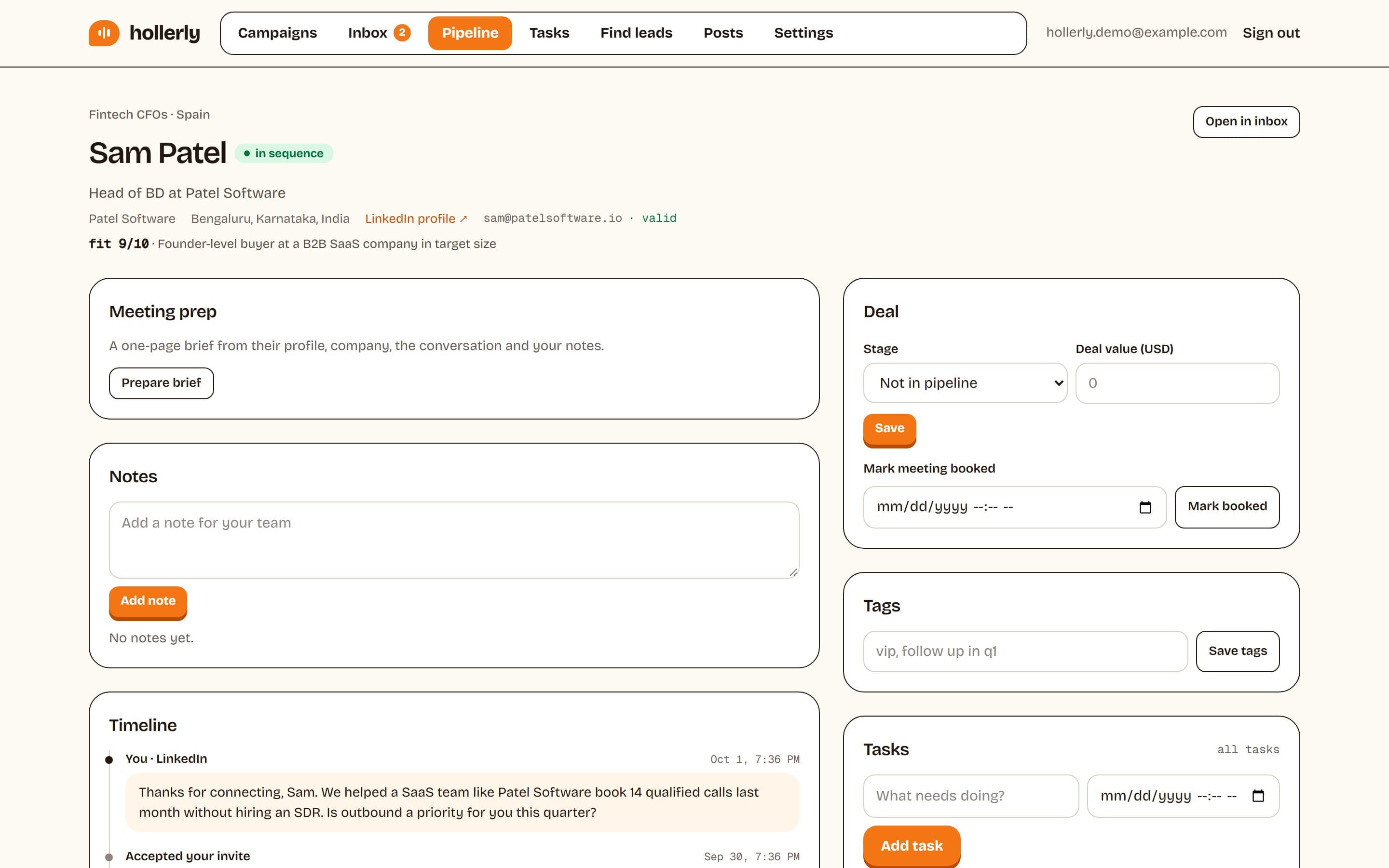
For most prospecting, you don't need to scrape company pages. A company's own website tells you more about what they do, and that's what Hollerly reads: for each lead it summarizes the company website to help write a relevant message. On Pro, company enrichment adds details to the lead record.
Safer alternatives to a LinkedIn scraper
Ask what you actually need the data for. If it's to reach out to people, you can usually skip the spreadsheet.
- Work inside LinkedIn. Save searches and lead lists (in Sales Navigator, if you have it) instead of exporting them. See how to export Sales Navigator leads for what LinkedIn allows.
- Use official CRM sync. Sales Navigator Advanced Plus syncs leads with Salesforce, Microsoft Dynamics and HubSpot.
- Collect less. Name, role, company and profile URL are enough to start a conversation. If you need an email, look it up for that one person with a LinkedIn email finder.
- Use a tool that acts like a person. Import leads from a search at a human pace, inside your own account, instead of bulk extraction.
How Hollerly handles leads
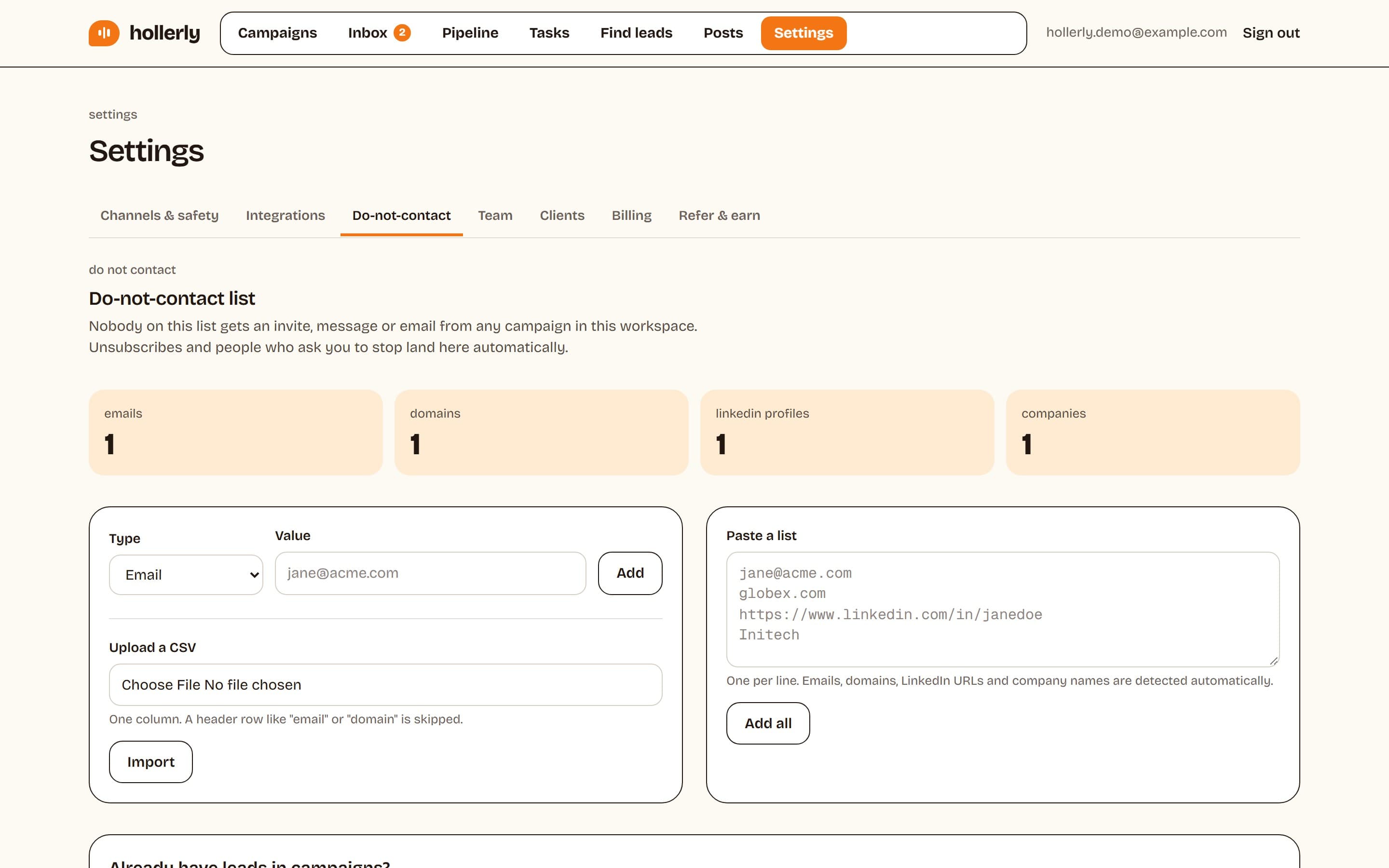
Hollerly is not a scraper. You paste a LinkedIn search, Sales Navigator search or post URL into a campaign, or upload a CSV you already have. Hollerly adds those leads by working through the search inside your own LinkedIn account at a human pace, within daily caps and working hours, from a dedicated cloud browser with an IP in your country. It skips anyone on your do-not-contact list or already in another campaign, and every email it sends includes an unsubscribe link. See LinkedIn prospecting for the full workflow.
The honest caveat: Hollerly still automates actions in your LinkedIn account, which LinkedIn's agreement doesn't allow. It reduces the risk with conservative limits and automatic pauses at the first warning. It doesn't remove it. Details are on our LinkedIn automation safety page, and plans on pricing.
FAQ
+Is it legal to scrape LinkedIn?
It depends. Scraping breaks LinkedIn's User Agreement and can get your account restricted. In the US, hiQ v. LinkedIn suggested scraping public pages may not violate the federal anti-hacking law, but hiQ was later found to have breached LinkedIn's terms. Privacy laws like GDPR also apply. This isn't legal advice.
+Will LinkedIn ban me for using a scraper?
It can. LinkedIn says members using scraping or automation tools risk having their accounts restricted or shut down. Tools that load many profiles quickly are the most likely to trigger restrictions. Lower volume reduces the risk, but no scraper can promise your account is safe.
+Is there a free LinkedIn scraper?
Several browser extensions offer free plans with small daily limits. Free doesn't change the risks: they still break LinkedIn's terms, still act in your logged-in account, and you're still responsible for the personal data you collect under laws like GDPR. Check the vendor's data and security practices first.
+Does LinkedIn have an API for scraping profiles?
No. LinkedIn's official APIs are permission-based and cover specific uses such as sign-in, sharing and approved partner integrations. They aren't a way to pull other members' profiles for lead lists. Vendors selling a "LinkedIn API" for profile data are usually reselling scraped data.
Get replies without the busywork
Hollerly finds the people, writes every message with AI and follows up on LinkedIn and email until they reply. Runs in the cloud, from $19 a month.
Start my 7-day free trial